Complete Comfort and Roll Control Solutions

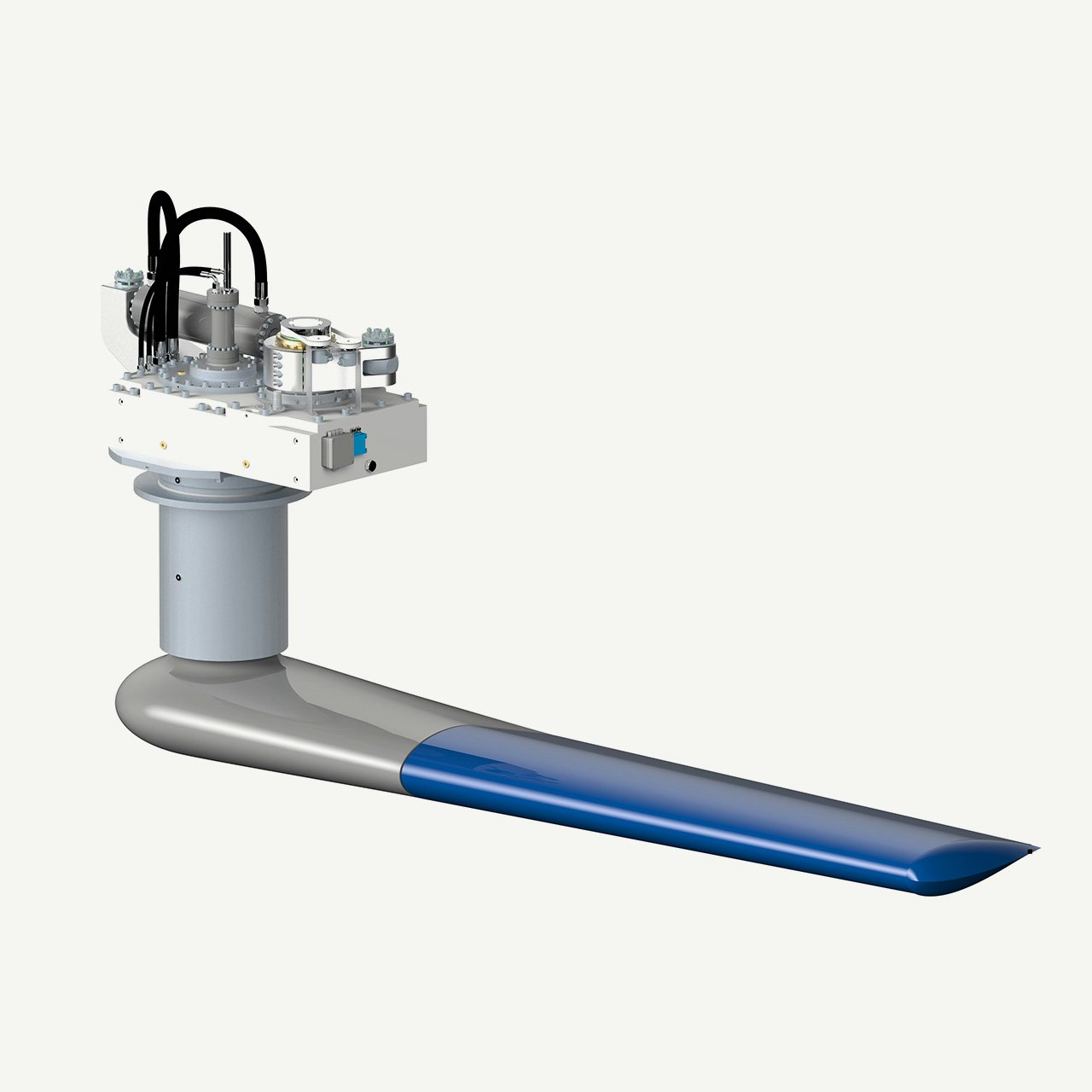
Dyna-Foil™ Retractable Stabilizer

The Dyna-Foil™ is not only retractable, but offers exceptional performance at anchor, slow speed and underway. This system creates a dynamic self-induced lift for outstanding Zero Speed™ operation and a highly efficient lift to drag coefficient for superior underway operations.

The world's most advanced Stabilizer

Quantum’s Dyna-Foil™ is the world’s most advanced fully retractable dual-purpose fin stabilizer, featuring a revolutionary foil design that redefines stabilizer operating principles.

Dyna-Foil™ is ideal for vessels with zero to medium-speed stabilizer requirements, Ice Class applications and/or space limitations for a fixed fin to fit within the hull envelope.

The DYNA-FOIL™ active fin stabilizer systems underwent extensive third-party model testing at the MARIN (Marine Research Institute Netherlands) to assess performance at anchor or Zero Speed™ and underway compared to a traditional fixed fin stabilizer. Typically, fixed fin stabilizers are limited in size by the ship’s “beam-keel” envelope (hull envelope) creating a challenge for superyachts and large military vessels requiring very large fins to optimize stabilization. DYNA-FOIL™ stabilizers retract completely into a full pocket or to a parallel position along side the hull (non-pocketed model) when not in use, eliminating that restriction so larger vessels can enjoy a same smooth ride at Zero Speed™ and underway.

Foil Angle Position Indicator

Swing Cylinder

Foil Articulating Cylinder

Main Shaft Gear

Pinion Gear

Main Shaft

Swing Tiller Arm

Select a feature above to learn more

Advantages & Features

Key advantages of the Dyna-Foil™ stabilizer system relative to a traditional fixed fin system are:

300% More Efficient

Higher lift coefficient of the foil compared to that of a low aspect fixed fin stabilizer. The stabilizer moment generated by the Dyna-Foil™ is up to 300% greater than a standard fixed fin of the same size at anchor or zero speed™

Zero Speed™ Advantages

The larger lever arm increases the stabilizing torque, reducing roll more effectively. The force exerted by the Dyna-Foil™ happens over a greater range of motion, reducing the impulse of force to the ship and smoothing the stabilizing action ultimately delivering greater passenger comfort.

Underway Advantages

The significantly larger lever arm increases the stabilizing moment, optimizing roll reduction and enhancing underway performance. The geometry of Dyna-Foil™ provides a higher lift-to-drag ratio when compared to a standard fin underway. This means, there is less impact to vessel speed and reduced fuel consumption with the Dyna-Foil™ system in use. The CFD graphs below illustrate the impressive coefficients of lift and drag when compared to the Angle of Attack.

Flexibility of Installation

The Dyna-Foil™ is available in both a fully pocketed version as well as a non-pocketed version to accommodate multiple types of hull forms.

Higher Lift Coefficient

The stabilizer moment (turning force) generated by the Dyna-Foil™ is up to 300% greater than a standard fixed fin of the same size at anchor or zero speed™. Additionally, Dyna-Foil™ has a more efficient range of motion than is possible with any fixed fin.

Gallery

Photo Gallery & Videos for the Dyna-Foil™ Retractable  Stabilizer 

How the Dyna-Foil™ Retractable Stabilizer System Works

Early Designs Based on Airfoils

The early designs of the Dyna-Foil™ fins were based on the airfoils used by the National Advisory Committee for Aeronautics (NACA) , the precursor to NASA. The codified NACA airfoils developed more than 80 years ago are the basis for most foils in use today, making them an ideal starting point.

Using powerful Computational Fluid Dynamics (CFD) calculations, Quantum was able to make several refinements to the NACA design including foil shape, thickness, aspect ratio, trailing edge profile, fairing shape and more. The final version is a foil that offers an incredible 0.78 Coefficient of Lift in reverse and 1.1 in forward in Zero Speed™ motion.

Quantum focused on one system that is capable of satisfying requirements for zero, slow, medium and higher speeds while also offering solutions for various configurations. Dyna-Foil™ can be installed with or without a pocket and maintain full functionality to up to 25 knots, while delivering lift for exceptional performance.

The Dyna-Foil™ dual-purpose, fully retractable stabilizer system delivers superior roll reduction both at Zero Speed™ and underway, while eliminating the traditional limitations of speed and performance found in conventional stabilizers.
Hydrodynamic Lift

Traditional fixed fin systems use a “paddling” action, whereas Quantum’s Dyna-Foil™ uses the hydrodynamic lift generated by water flow over the foil from a swing action of the unit. This action creates water flow over the surface of the foil thus generating lift. The direction of swing determines the direction of lift force generated. Both the angle of attack and the swing speed are controlled variables that are adjusted to provide the optimal ship stability and exceptional roll reduction.

Foil Dynamics

The Dyna-Foil™ profile is optimized to generate significant lift at low angles of attack while maintaining low drag. With its unique dual-axis actuators the Dyna-Foil™ has a more efficient motion than is possible with single axis fins. When paired with the mechanical properties of the dynamic foil positioning system, this allows for rapid, near-instantaneous foil adjustment. This precise timing is essential for achieving maximum roll reduction with minimal energy use.

Hybrid Power Unit

The Dyna-Foil™ system features a newly designed, dedicated hybrid power unit, integrating proven hardware with an innovative approach to hydraulic power management and energy efficiency. Using stored-energy accumulators and variable motor control, the hybrid delivers power, with exceptionally low power cycling demands on the vessel’s electrical network. An in-tank submerged pump reduces airborne noise without the need for external sound shielding. Structural-borne noise is mitigated through a combination of mechanical absorption and hydraulic suppression technologies.