As a vessel’s most vital structural entity, the hull is precisely designed to fulfill a diverse range of requirements throughout the life of a ship. A vessel’s entire design and construction is centered on the hull.
The hull is a ship’s watertight enclosure, engineered to provide sufficient protection for the cargo, machinery, and passenger accommodations. Its most basic purpose is to safeguard against weather, flooding, and/or structural damage.
However, this definition alone is a significant oversimplification that would reduce our understanding of the many aspects of a ship’s hull considerably. Beyond its core function, the hull is designed for numerous other factors that will come into play over the full length of a vessel’s lifetime.
Composed of a complex assortment of parts, the hull of a vessel incorporates many aspects of shipbuilding technology. Understanding the basic functions of a ship’s hull and the terms used in discussing its characteristics is a necessity before its role in boat stability design can be fully comprehended.
The following is a condensed list of hull-related nomenclature, providing an overview of the words and phrases you can expect to see regularly used about hull design:
The bow is the hull’s forwardmost contour, while its aft-most is referred to as the stern. More specifically, the bow’s forwardmost contour is called the stem.
The forward perpendicular can be defined as an imaginary perpendicular drawn at the point where the waterline and bow intersect. It is commonly used as the forward reference of the ship’s hull in the majority of the hydrostatic calculations.
The exact definition of the aft perpendicular can depend on the specific ship designed. It may either be the perpendicular drawn through the center-line of the rudder pintles or the one through the aft side of the rudder post. It is used as the aft reference line in all hydrostatic calculations.
As the name suggests, the length between perpendiculars is the length between the aft and forward perpendiculars. Also referred to as “LBP,” it is a critical parameter for stability calculations, making it an important part of ship stability analyses.
The sheer is the upward curve that is formed by the ship’s main deck, in reference to the deck’s level at midship. Generally, the forward sheer is more than the aft sheer, and mainly to keep a “dry ship” by minimizing the amount of “green water” coming onto the deck. This reduces ship resistance and helps to maintain forward view from the bridge.
The summer load line is the ship’s waterline at sea water, specifically when it is at its design weight and ballast conditions. Also known as the “design draft,” the summer load line is used to form the reference for all of the ship’s remaining load lines.
The ship’s length of waterline is its hull’s length at the summer load line. This value is needed for the calculation of the ship’s hydrostatics, in addition to calculations for propeller design.
The overall length is the measurement of distance between the aft-most and forward-most point of the ship’s hull. It is primarily used to design the ship’s plans for docking/undocking, and can be an important measurement to consider in the selection of a proper building block in a shipyard with multiple building docks available.
As previously mentioned, the hull of a vessel is its core structural entity, amounting to about 70 percent of a total structural design. This is why the process of hull design is so complex.
In addition to its importance in structural design, another key characteristic of the hull is its maneuverability. Also called its directional or course-keeping performance, the bare hull is evaluating using the following:
Therefore, straight-line stability is the primary goal in the development of the hull. Keep in mind that directional and path stability can only be achieved by extra means of a rudder and autopilot.
A main deck superstructure can decrease the bending stress at the deck, but can also cause deformations located at the superstructure ends. In order to be satisfactorily efficient, the superstructure must be capable of absorbing a certain amount of bending stress. It becomes the ship designer’s decision whether to aim for a superstructure that can take up bending stress, or one that abstains from interaction with the hull.
In addition to those noted above, there are other aspects of hull design that affect performance at sea, including its:
Quantum is the industry’s leader in marine technology, trusted to equip a diverse range of vessels with performance-boosting equipment.
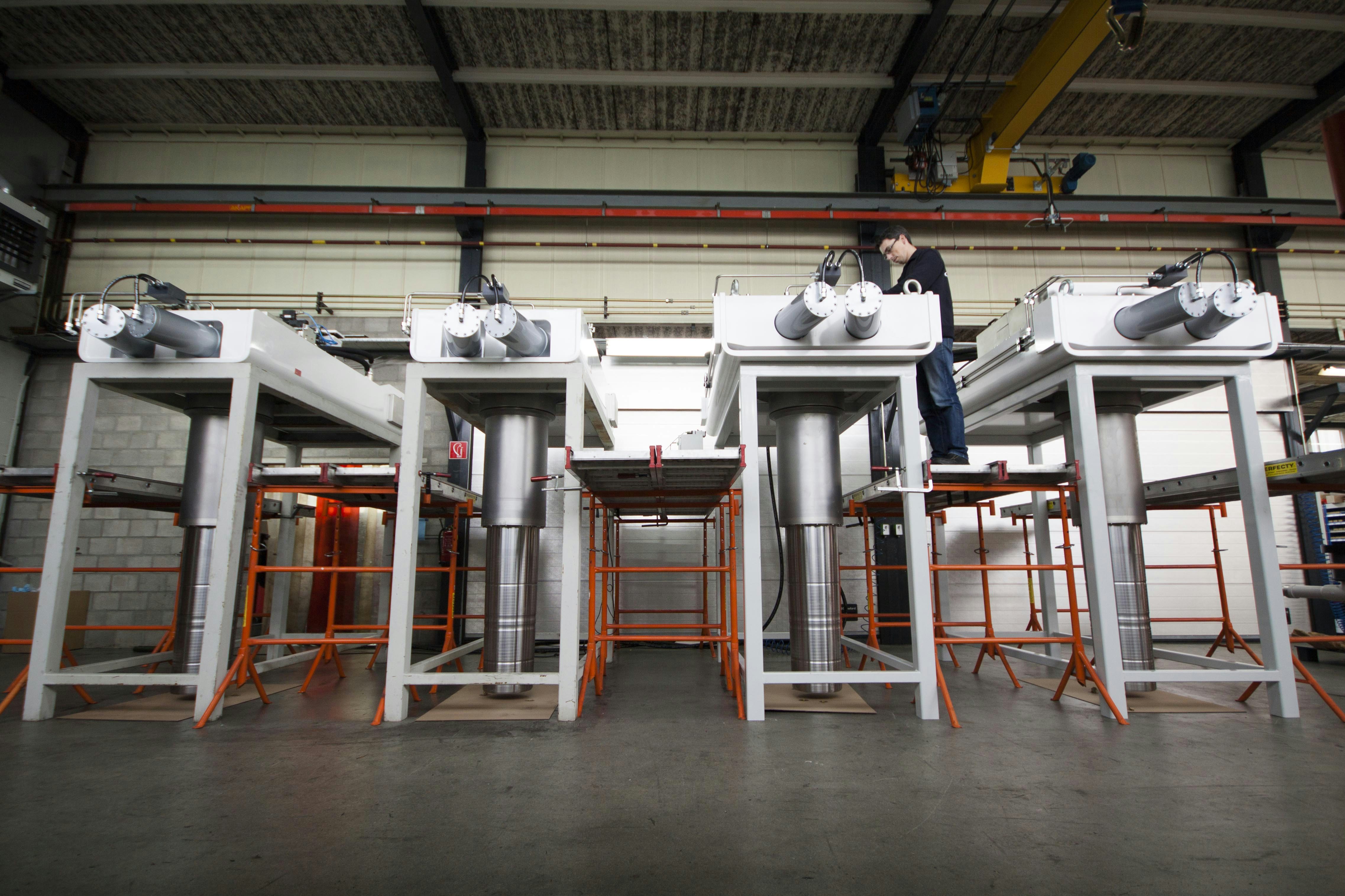
Using advanced engineering, we have crafted a series of products designed to support an improved ship stability design for your vessel. Included in our product series are our hull units for fins, which perform vital roles in the operation of our cutting-edge stabilization systems.
Our extensive expertise in the design, construction, and operation of large vessels and commercial ships make Quantum a trusted source for vessel owners and operators around the globe.
For more information about how ship hull design can factor into your vessel’s stability and performance, as well as details about our acclaimed products, please contact Quantum Marine Stabilizers today.